Introduction
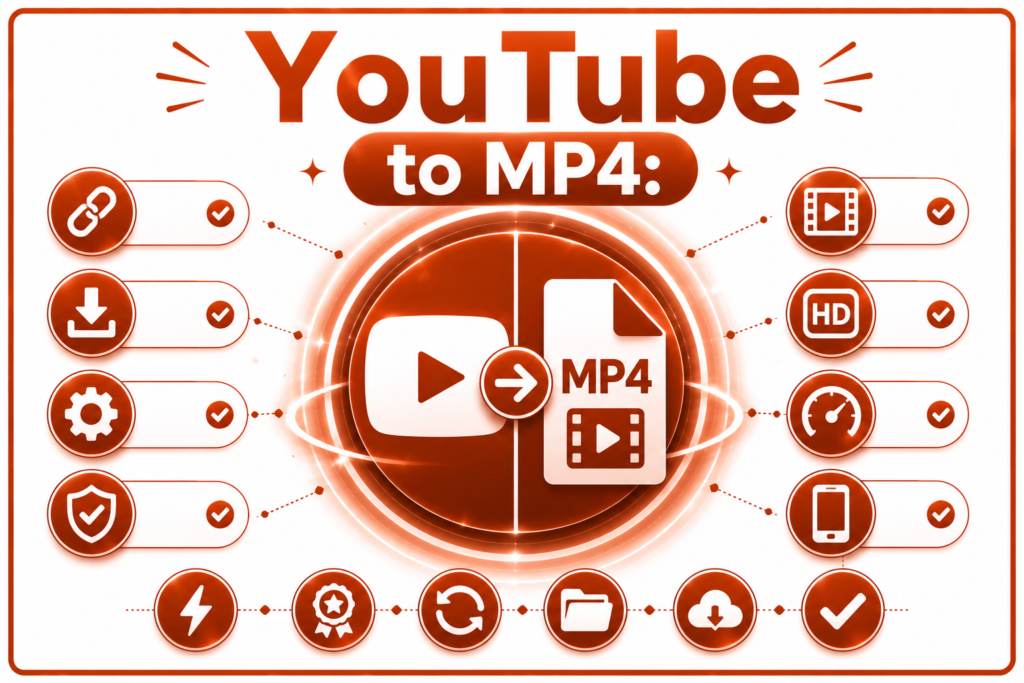
The way individuals watch videos has changed as a result of the internet. Every day, millions of viewers watch documentaries, corporate presentations, instructional videos, entertainment films, and artistic material. Searches for YouTube to MP4: The Ultimate Guide to Converting Videos Easily are rising globally as a result of this increasing demand.
Many people are interested in learning about digital video content management strategies, offline watching alternatives, and video formats. Because MP4 is so compatible with smartphones, tablets, PCs, smart TVs, and other devices, it has become one of the most popular video formats.
We will examine YouTube to MP4: The Ultimate Guide to Converting Videos Easily, define MP4 files, talk about legal issues, highlight aspects of video quality, and offer best practices for handling video content responsibly and securely.
MP4: What Is It?
It’s crucial to understand what MP4 truly means before reading YouTube to MP4: The Ultimate Guide to Converting Videos Easily.
One of the most widely used digital video formats nowadays is MP4, or MPEG-4 Part 14. Video, audio, picture data, and subtitles can all be included in a single file.
Because it offers a good balance between file size and video quality, the format is commonly utilized. Because of this, MP4 may be streamed, stored, shared, and played on many devices.
MP4 files are supported by the majority of contemporary operating systems and media players without the need for further software.
Why MP4 Is So Well-liked
The global compatibility of MP4 files is a big factor in the continued popularity of YouTube to MP4: The Ultimate Guide to Converting Videos Easily searches.
MP4 videos may be viewed on smartphones, tablets, laptops, desktop computers, game consoles, and smart televisions. Additionally, the format is effective for cloud storage and internet sharing.
MP4 files are now the format of choice for many content producers and users as they frequently offer outstanding video quality while keeping file sizes manageable.
Comprehending Video Formats
The storage of audio and video data is determined by video formats.
Understanding that there are many formats, such as AVI, MOV, MKV, WMV, and MP4, is helpful when talking about YouTube to MP4: The Ultimate Guide to Converting Videos Easily.
In terms of compatibility, compression, and quality, each format has unique benefits. However, because of its adaptability, MP4 continues to be one of the most used formats.
MP4 is a sensible option for both personal and business use because of its extensive support.
Legal Aspects
An essential component of YouTube to MP4: The Complete Guide to Video Conversion Understanding copyright and content ownership is simple.
Ownership protects a lot of YouTube videos. The usage, sharing, and distribution of their work are under the creators’ and rights holders’ authority.
Users should always abide with platform guidelines, creator permissions, and copyright laws. Whenever feasible, it is best to use official download options or licensing agreements for content.
Maintaining a healthy online environment and supporting artists are made possible by respecting intellectual property.
Advantages of Accessing Videos Offline
Because they want to watch videos offline, a lot of individuals look up YouTube to MP4: The Ultimate Guide to Converting Videos Easily.
When traveling, commuting, learning, or working in places with spotty internet availability, offline access might be helpful. Presentations, instructional materials, and training films are typical examples.
Nowadays, a lot of platforms offer official offline watching capabilities that let consumers access content while upholding author rights and platform policies.
Resolution and Quality of Videos
When handling MP4 files, video quality is a crucial consideration.
480p, 720p, 1080p, 1440p, and 4K are common resolutions. Sharper images are produced by higher resolutions, but they also take up more storage space.
Users are better able to make judgments regarding file management and playback preferences when they are aware of video quality.
Quality should always be weighed against storage needs while examining YouTube to MP4: The Ultimate Guide to Converting Videos Easily.
Storage-Related Issues
Video files can take up a lot of disk space.
Longer videos can need several gigabytes, while small high-definition videos could use hundreds of megabytes. Effective management of media libraries is facilitated by careful storage planning.
External drives, well-organized file systems, and cloud storage services may all increase accessibility and lessen clutter.
A key component of any digital media strategy is efficient storage management.
MP4 Playback on Mobile Devices
The most popular gadget for watching videos these days is a smartphone.
YouTube to MP4: The Complete Guide to Video Conversion The fact that MP4 files perform very well on mobile devices continues to garner notice.
MP4 playback is incorporated into the majority of smartphones. Users may now watch video material without the need to install specialist media players.
The format’s continued popularity is largely due to its compatibility.
Applications of MP4 Videos in Education
Digital material is becoming more and more important to educational institutions.
Video resources are frequently used by students for online education, training programs, language instruction, and career advancement. Because MP4 files may be accessible on a variety of systems and devices, they are often utilized.
Because of its adaptability, MP4 is a useful format for teaching.
The need for accessible video formats is expected to rise as online learning keeps growing.
MP4 and Content Production
MP4 files are often used by content producers and distributors.
MP4 outputs are supported by many video editing programs because the format strikes a compromise between efficiency and quality. Uploading MP4 movies to websites, social media sites, and video-sharing services is simple for creators.
MP4 offers organizations a dependable option for instructional content, product demos, and marketing films.
Because of its adaptability, the digital media sector uses it as a standard format.
Typical Errors to Avoid
When handling video files, a lot of users make blunders.
Ignoring copyright limitations is one prevalent problem. Another is keeping a lot of files in an unorganized manner.
Additionally, users should refrain from accessing dubious websites that can be infected with malware or installing software from unidentified sources.
Adhering to safe digital behaviors helps safeguard gadgets and personal information
Safety & Security on the Internet
Prioritizing online safety should always come first.
Users should use caution while downloading software and visiting strange websites when studying YouTube to MP4: The Ultimate Guide to Converting Videos Easily.
Maintaining up-to-date antivirus software, confirming the legality of websites, and avoiding dubious ads are all examples of secure browsing practices.
Robust security procedures aid in lowering the danger of malware and other online dangers.
Upcoming Developments in Video Technology
Video technology is still developing quickly.
The future of digital content is being shaped by cloud-based media management, enhanced compression technologies, artificial intelligence, and greater resolutions.
Video experiences will keep becoming better as devices get more powerful and internet connections rise.
It is anticipated that the significance of flexible formats like MP4 will continue to grow for many years to come.
Common Questions
An MP4 file: what is it?
MP4 is a widely used digital video format that may include graphics, music, video, and subtitles all in one file.
Why is MP4 so popular?
MP4 provides good quality, efficient file sizes, and outstanding compatibility on a variety of devices.
Is MP4 compatible with mobile devices?
Indeed. The majority of tablets and smartphones can play MP4 files without the need for further software.
Why should users abide with copyright regulations?
Creators are safeguarded by copyright rules, which also guarantee that they are fairly compensated and acknowledged for their contributions.
Is it possible to utilize MP4 files for educational purposes?
Yes, MP4 is frequently used for training materials, instructional films, presentations, and online learning.
Conclusion
The Complete Guide to Converting Videos from YouTube to MP4 is still one of the most useful and extensively supported video codecs, thus it’s an issue that keeps getting attention. It is beneficial for business, education, entertainment, and content creation because to its efficiency, compatibility, and adaptability.
Users may responsibly enjoy digital media while safeguarding their devices and helping content producers by being aware of video formats, adhering to copyright laws, putting online safety first, and choosing reliable content sources.