Starting a dropshipping business in the UAE in 2027 can be an exciting opportunity for entrepreneurs who want to sell products online without managing their own inventory. With dropshipping, you create an online store, find reliable suppliers, and sell products directly to customers. The supplier handles product storage and shipping, while you focus on marketing, customer service, and growing your business.
The UAE is an attractive market for eCommerce because of its digital infrastructure, international business environment, and access to customers across the Middle East. However, starting successfully requires more than creating a website. You need to understand business licensing, product selection, payment methods, shipping, and marketing.
In this guide, you’ll learn how to start dropshipping in the UAE in 2027.
What Is Dropshipping?
Dropshipping is an eCommerce business model in which you sell products without purchasing or storing inventory yourself.
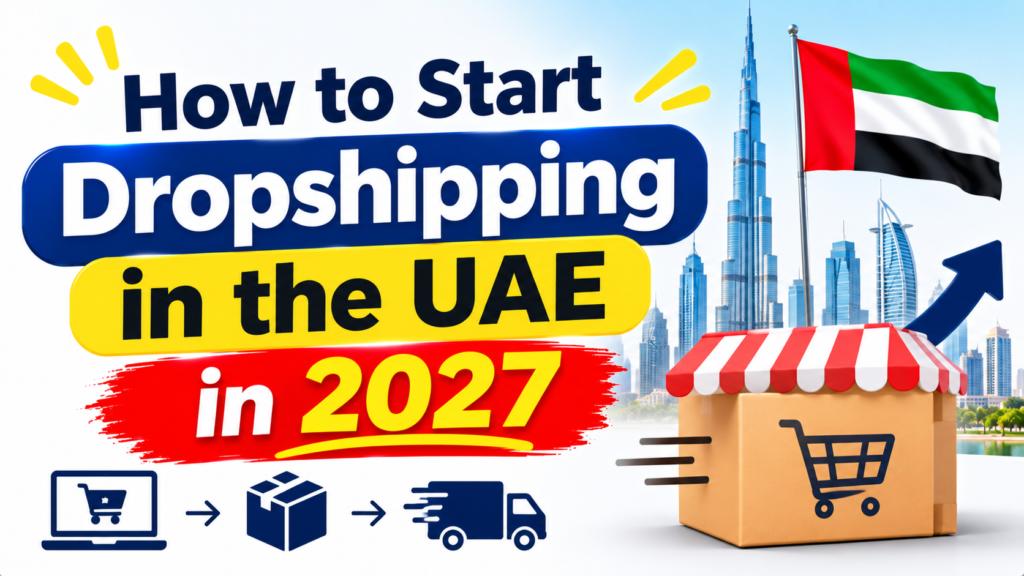
Here’s how it works:
- You create an online store and list products.
- A customer places an order through your website.
- You send the order details to your supplier.
- The supplier prepares and ships the product.
- You earn the difference between your selling price and the total costs.
For example, imagine you sell a product for AED 150. Your supplier charges AED 75, and shipping and other costs are AED 20. Your remaining AED 55 is your gross margin before advertising, payment fees, taxes, refunds, and other expenses.
Step 1: Research the UAE Dropshipping Market
Before creating your store, research what customers in the UAE are buying.
Look for products that solve everyday problems, offer convenience, or have clear benefits. Consider customer interests, competition, delivery expectations, and product demand.
Some product categories worth researching include:
- Home and kitchen accessories
- Beauty and personal care products
- Fitness accessories
- Pet supplies
- Mobile accessories
- Travel products
- Car accessories
These are research ideas, not guaranteed winning products. Check demand and competition before investing money.
You can use Google Trends, marketplace searches, and social media platforms to identify popular product categories.
Step 2: Choose a Profitable Niche
A niche is a specific category of products that your store focuses on. Instead of selling everything, start with one category and build a clear brand around it.
For example, you could create a store focused on home organization, fitness accessories, or pet products.
When selecting your niche, consider these factors:
Customer demand: Is there evidence that people want these products?
Competition: Can your store offer something different from existing sellers?
Profit margin: Can you cover advertising, shipping, payment fees, and other expenses?
Product quality: Can your supplier consistently deliver products that meet customer expectations?
Shipping: Can the products reach UAE customers within a reasonable time?
Avoid choosing a product only because it is trending. A good niche should have real customer demand and reliable suppliers.
Step 3: Understand UAE Business Licensing Requirements
One of the most important steps when starting dropshipping in the UAE is obtaining the appropriate business licence.
The UAE requires businesses conducting eCommerce activities to have the relevant licence and approvals. The correct option depends on your business activity, location, ownership structure, and target customers.
Common options include:
- Mainland licence: Usually obtained through the relevant emirate’s Department of Economy and Tourism or Department of Economic Development.
- Free zone licence: Issued by a free zone authority that offers eCommerce or trading activities.
- Individual online business options: Some emirates offer specific online-selling licence categories for eligible individuals.
Before applying, confirm that the licence covers your intended dropshipping and online trading activities. Also check whether additional approvals are required for your products or sales channels.
A free zone licence does not automatically mean you can sell directly to every UAE mainland customer without additional arrangements. Confirm the applicable rules with the licensing authority.
The UAE Government’s official eCommerce guidance explains the licensing framework and responsibilities of online sellers.
Step 4: Find Reliable Dropshipping Suppliers
Your supplier plays a major role in your business. Even if your website and marketing are excellent, poor product quality or delayed deliveries can damage your reputation.
When comparing suppliers, check:
- Product quality and customer reviews
- Shipping times to the UAE
- Shipping costs and tracking availability
- Return and refund policies
- Communication and customer support
- Product availability
- Packaging and branding options
You can research international suppliers through platforms such as AliExpress, CJdropshipping, and other wholesale or dropshipping providers.
You can also investigate UAE-based wholesalers and fulfillment companies. Local suppliers may offer faster delivery, although product prices and availability can differ.
Order samples before promoting a product. Testing the product yourself helps you understand its quality, packaging, and delivery experience.
Step 5: Create Your Online Store
After selecting your niche and suppliers, build an online store where customers can browse products and place orders.
Popular eCommerce platforms include:
- Shopify: A hosted platform for creating and managing online stores.
- WooCommerce: A flexible eCommerce solution built for WordPress.
- Wix: A website builder with eCommerce features.
Choose a platform based on your budget, technical experience, and business requirements.
Your store should include:
- A professional homepage
- Clear product descriptions
- High-quality product images
- Transparent pricing
- Contact information
- Shipping and delivery details
- Return and refund policies
- Privacy policy and terms of service
Make sure your website works properly on mobile devices. Many customers browse and shop using smartphones.
Step 6: Set Up Payment Methods
Customers need a secure and convenient way to pay for their orders.
Research payment providers that support your business location, legal structure, and target market. Availability and approval requirements vary between providers.
Possible payment options to investigate include:
- Credit and debit card payments
- Digital wallets
- Bank transfers
- Cash on delivery, where supported
Cash on delivery can appeal to some customers, but it also creates risks such as refused deliveries and additional logistics costs.
Before choosing a payment provider, compare transaction fees, settlement times, supported currencies, refund procedures, and integration options.
Step 7: Understand Shipping and Delivery
Shipping is one of the biggest factors affecting customer satisfaction in dropshipping.
If your supplier ships products internationally, delivery may take longer than customers expect. Be transparent about estimated delivery times before customers place orders.
Consider these practices:
- Work with suppliers who provide tracking.
- Confirm delivery estimates for UAE destinations.
- Explain shipping fees clearly.
- Create a process for delayed or lost orders.
- Make your return and refund policies easy to find.
If possible, compare suppliers that offer local or regional fulfillment. Faster delivery can improve the customer experience, but calculate the additional costs before making a decision.
Step 8: Understand VAT and Other Tax Responsibilities
Business owners should understand their tax obligations before launching.
The UAE’s standard VAT rate is 5%. According to the Federal Tax Authority, a UAE-based business generally must register for VAT when its taxable supplies and imports exceed AED 375,000 over the relevant period. Voluntary registration may be available above AED 187,500, subject to the applicable rules.
Different rules can apply to businesses based outside the UAE that make taxable supplies in the country.
Keep accurate records of sales, expenses, supplier payments, refunds, and invoices. Consult a qualified UAE tax professional to determine how VAT and other tax obligations apply to your specific dropshipping arrangement.
Step 9: Promote Your Dropshipping Store
Once your store is ready, focus on attracting potential customers.
Here are several marketing strategies to consider:
Social Media Marketing: Use Instagram, TikTok, Facebook, and other suitable platforms to share product demonstrations, useful videos, and customer-focused content.
Paid Advertising: Test advertising campaigns with small budgets before increasing spending. Measure your cost per purchase and overall profitability.
Search Engine Optimization: Create helpful product pages, category pages, and blog posts targeting relevant search terms. Use descriptive titles, clear headings, and useful content.
Influencer Marketing: Work with relevant creators who have an audience interested in your products. Evaluate audience quality and engagement rather than follower count alone.
Email Marketing: Build an email list with customer permission. Send product updates, useful information, and promotional offers without overwhelming subscribers.
Step 10: Track Results and Improve Your Business
Launching your store is only the beginning. You need to measure performance and improve your business over time.
Monitor important metrics such as:
- Website visitors
- Conversion rate
- Average order value
- Advertising costs
- Refund and return rates
- Delivery performance
- Customer satisfaction
- Profit after expenses
If a product receives traffic but few orders, review its price, product page, images, and customer reviews. If customers complain about delivery, investigate your supplier and shipping arrangements.
Use real business data to decide what to improve rather than relying on assumptions.
Common Dropshipping Mistakes to Avoid
Beginners can make several mistakes when starting a dropshipping business.
Choosing products without research: A popular-looking product may not have enough demand or profit potential.
Ignoring licensing requirements: Selling online does not remove the need to comply with applicable UAE business regulations.
Working with unreliable suppliers: Poor quality and delayed shipping can lead to refunds and negative reviews.
Making unrealistic delivery promises: Always provide accurate shipping estimates.
Spending too much on advertising: Test campaigns carefully and calculate your actual profit.
Ignoring customer service: Respond to questions, handle complaints, and provide clear refund information.
Final Thoughts
Starting a dropshipping business in the UAE in 2027 can be a practical way to enter eCommerce without maintaining your own inventory. However, success depends on choosing the right niche, finding reliable suppliers, building a trustworthy online store, and understanding UAE licensing and tax requirements.
Start with a focused product category, test your suppliers, and keep your initial expenses under control. Most importantly, prioritize customer satisfaction and make decisions based on real business results.
With proper planning and consistent improvement, you can build a dropshipping business that has the potential to grow in the UAE market.