
Introduction
When people are stranded, they look for assistance. Instead of a lengthy lecture, they want a concise response. Instead of ambiguous counsel that sounds wonderful but doesn’t accomplish anything, they want actions that make sense.
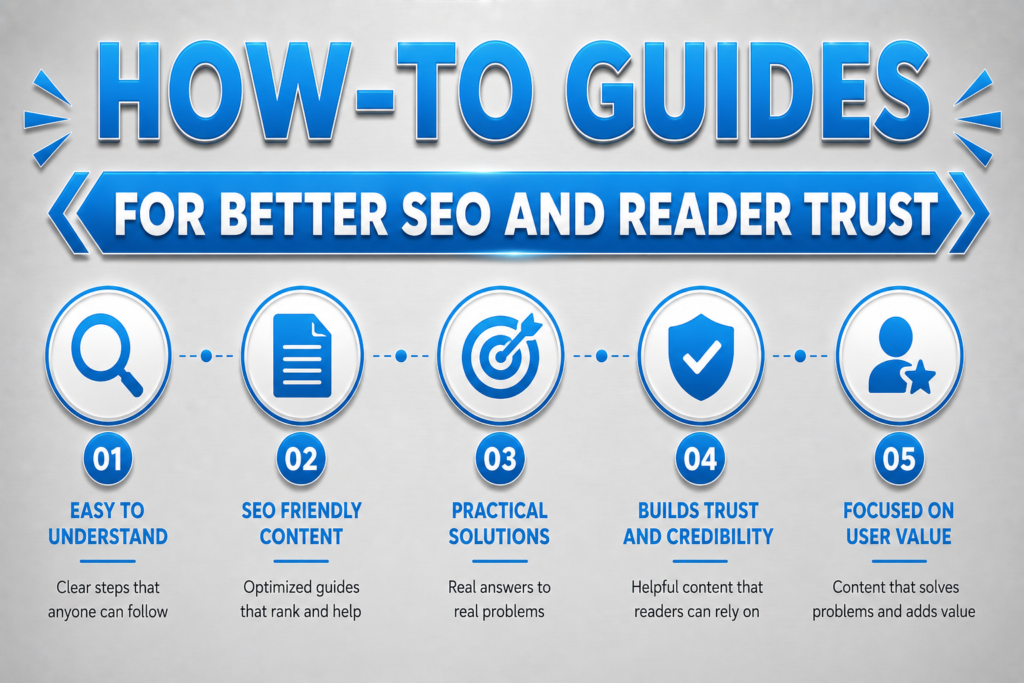
How-To guides are so effective because of this. They provide readers with a clear route from issue to resolution. Because the material seems helpful right away, they also aid in the development of trust on websites.
The objective is straightforward if you want to produce better How-To Guides. Clearly explain to the reader what is wrong, why it occurs, and how to repair it. Blogs, corporate websites, tech information, and general advice all benefit from this layout.
Excellent guides do more than just explain. They are time-saving. They minimize frustration. They make readers feel like someone finally comprehended the situation.
This article illustrates how to make How-To Guides that are easy to read, beneficial to search engines, and truly helpful to real people.
A Brief Response
Quick Answer: How-To Guides work because they answer one distinct problem with straightforward methods. To make them successful, utilize a compelling title, concise paragraphs, clear headers, and practical directions. Most readers remain when the guide offers the solution promptly and the following step is apparent.
Why Are How-To Guides So Effective?
Why It Occurs
When they visit a guide, readers have a job in mind. They wish to install, repair, configure, or comprehend a procedure. They don’t want any more noise. They desire advancement.
How-To guides work so well because of this. They align with the reader’s goal. The problem is where the article begins, and the solution is where it concludes. This gives the content a sense of completion.
This style is also preferred by search engines due to its ease of comprehension. It is simpler to index and display in search results when the question, response, and structure all obvious.
The Solution
If you are writing a manual, maintain a straightforward format:
- Clearly state the issue.
- Describe the reason for it.
- Describe the precise steps.
- Present the outcome that the reader should anticipate.
Because it eliminates uncertainty, that structure is effective. Additionally, it keeps the reader going.
The outcome
The reader feels more assured and less overwhelmed. That is the true worth of a capable mentor.
What Constitutes an Effective How-To Guide?
Why It Occurs
Because they attempt to accomplish too much, many guides fall short. Before the reader gets the remedy, they add background information, viewpoints, and other elements. Everything slows slower as a result.
A competent guide maintains concentration. It provides an answer to one query. It doesn’t stray.
The Solution
An effective How-To Guide article ought to contain:
- A concise title that accurately describes the issue
- A brief synopsis that identifies the problem
- A brief, straightforward response for speedy readers
- Detailed directions
- A brief overview on typical errors
- A final outcome that describes the modifications following the repair
Don’t complicate the wording. Make use of brief paragraphs. Anything that doesn’t encourage the reader to act should be eliminated.
Typical Errors
- Too much background information before the answer
- Combining three distinct subjects into a single guide
It gets simpler to use, read, and trust the instructions.
How Do How-To Guides Aid SEO?
Why It Occurs
People use simple language when searching. They write the issue as they see fit. This implies that a good guide can easily match search intent.
For instance, readers may look up how to use a tool, set up a feature, or solve a problem. These are precisely the kinds of queries that How-To Guides can effectively address.
Content that clearly addresses a need is rewarded by search engines. It is easier for search engines to comprehend a page when the title, headings, and body all point to the same question.
The Solution
Take these actions to enhance SEO:
- Include the primary keyword in the title.
- Make use of it at the beginning of the introduction.
- Naturally add relevant terms.
- Make use of titles that correspond to actual queries.
- Before going into more depth, address the primary issue.
Don’t stuff every paragraph with buzzwords. This typically makes the material feel rigid and hinders reading.
The outcome
At the same time, your guide becomes easier to find and more helpful.
How Do You Write How-To Manuals That People Actually Complete?
Why It Occurs
Because a guide seems sluggish or overly general, many readers quit halfway through. They might not even despise the subject. They simply don’t want to put in a lot of effort to find the solution.
This is a major issue since a guide is only useful if readers read it all the way through.
The Solution
Continue to move the guide. Make brief sentences. Divide the procedure into steps with numbers. Keep each section concentrated on a single concept. If a step requires description, just include information that will motivate the reader to take action.
A excellent guide should not feel like a lecture in a classroom, but rather like a helping road. The reader should get closer to the solution with each paragraph.
Expert Advice
Go through the article as if you were a busy person. Cut a paragraph if it seems clumsy or sluggish.
The outcome
Because the instruction feels useful and simple to follow, readers remain longer.
Which Subjects Are Ideal for How-To Guides?
Why It Occurs
Not every subject is appropriate. The subjects where readers need assistance right now are the strongest.
Device setup, app troubles, website duties, account problems, software repairs, and routine activities that customers don’t want to accomplish on their own are typically included in this.
The Solution
Select subjects that address queries such as:
- How can I resolve this?
- How should I configure this?
- Why isn’t this functioning?
- How can this be done most easily?
- First, what should I do?
Because they directly address a reader issue, those inquiries are a great choice for How-To Guides.
The outcome
Readers receive the response they truly sought, and the material remains focused.
How Can a Guide Be Made Easy to Trust?
Why It Occurs
Content that seems particular and honest is trusted by people. Vague counsel that seems plagiarized or too optimistic is not trusted by them.
Trust is important since a guide is only helpful if the reader has faith in its effectiveness.
The Solution
Give precise instructions on what to do. Indicate what the reader should click, modify, verify, or test. When examples are helpful, use them. Maintain a straightforward and composed tone.
Indicate if anything is optional. Mention any frequent reasons why a step can fail. Because of its honesty, the
Indicate if anything is optional. Mention any frequent reasons why a step can fail. The essay is more credible and helpful because of its candor.
Typical Errors
- Sounding too formal
- Making generalizations without outlining the procedure
The outcome
Readers are more inclined to follow the guide through to the end because they have more faith in it.
How Do How-To Guides Encourage Readers to Come Back?
Why It Occurs
When content resolves their issue without making things more difficult, readers return. Because it saves time, a useful guide makes a good impression.
This is particularly true when the stages are effective and the text is clear.
The Solution
Write comprehensive guidelines. Don’t simply take the initial step. Show the entire process from the issue to the solution. To let visitors know what to anticipate, structure your blog consistently.
People start to believe that your website is a helpful resource if your instructions are constantly clear.
The outcome
Because they are aware that your information is useful rather than pretentious, readers come back.
Common Questions
1.Why do people look for how-to guides?
When people need to finish a task, solve an issue, or quickly grasp a process, they go for How-To Guides. They often seek straightforward responses and easy processes. For the majority of readers, an excellent guide eliminates confusion and saves time.
2.Why is a How-To Guide helpful?
A helpful guide focuses on one issue at a time, employs simple language, and provides clear directions. It ought to assist the reader in completing a job without speculating. The finest manuals are straightforward, detailed, and simple to follow from beginning to end.
3.What is the ideal length for a how-to guide?
A How-To Guide should be brief enough to be understandable while still providing a thorough explanation of the subject. Certain subjects just require a few hundred words. Others require further information. The amount of information required for the reader to adequately answer the problem determines the appropriate length.
4.Are How-To Guides Beneficial to SEO?
Indeed, because they clearly match search intent, how-to guides frequently score well. People look for answers, and guides offer them in a methodical manner. Effective headers, practical instructions, and organic keywords improve the content’s comprehension by search engines.
5.Which subjects are most effective for How-To Guides?
The greatest topics are those that entail learning, troubleshooting, setup, or step-by-step procedures. Device repairs, software guidelines, account assistance, website chores, and regular problem resolution are some examples. It typically makes a good guide topic if individuals are looking for a solution on a frequent basis.
6.How can I improve the readability of my guide?
Make use of numbered stages, concise paragraphs, and distinct headings. Steer clear of lengthy text passages. Keep each section concentrated on a single concept. When a reader can swiftly skim a guide and still comprehend the answer, it is simpler to read.
Conclusion
How-To guides are effective because they provide straightforward solutions to actual situations. In addition to helping websites develop trust, increase search prominence, and encourage longer reading sessions, they provide readers with guidance when they feel lost.
The most effective guides maintain their focus. They employ simple language, provide a straightforward response to one inquiry, then clearly illustrate the following step. Start with the issue, describe the root reason, and then offer a solution if you want your article to be stronger.
That simple formula works again and again.A good guide does not need to be clever. It needs to be clear.

Pingback: Recurring Affiliate Programs - Mstech24.com by AbdulMuhsin